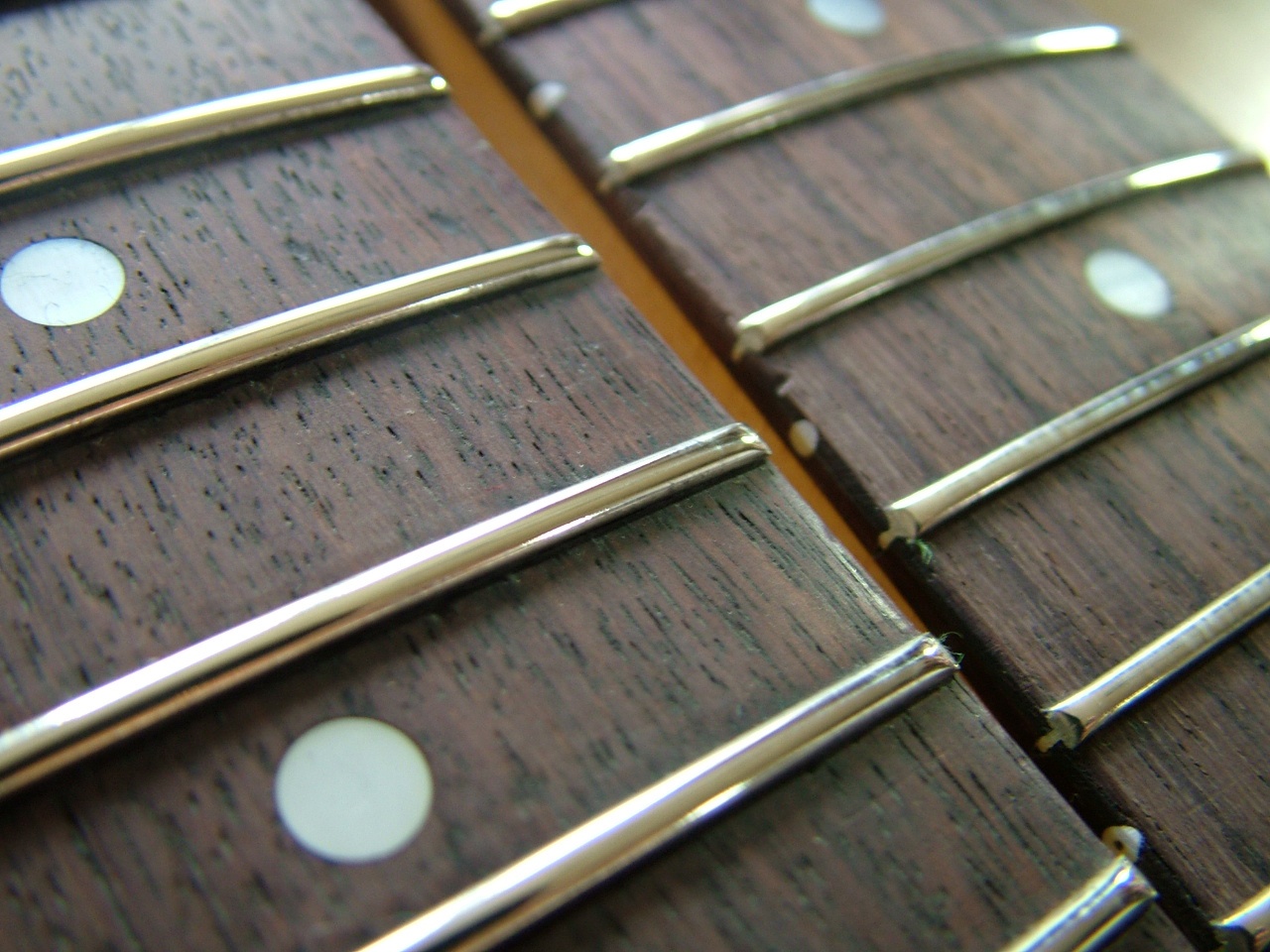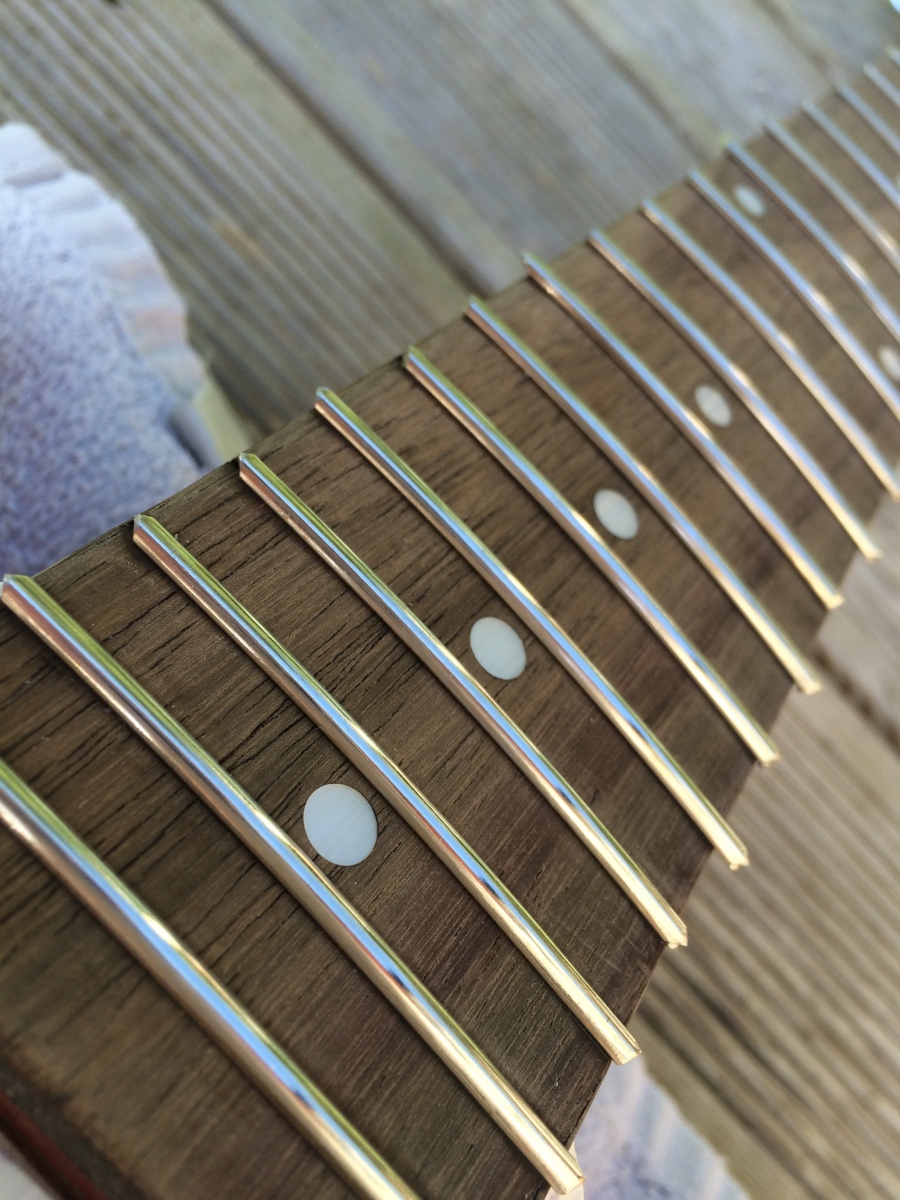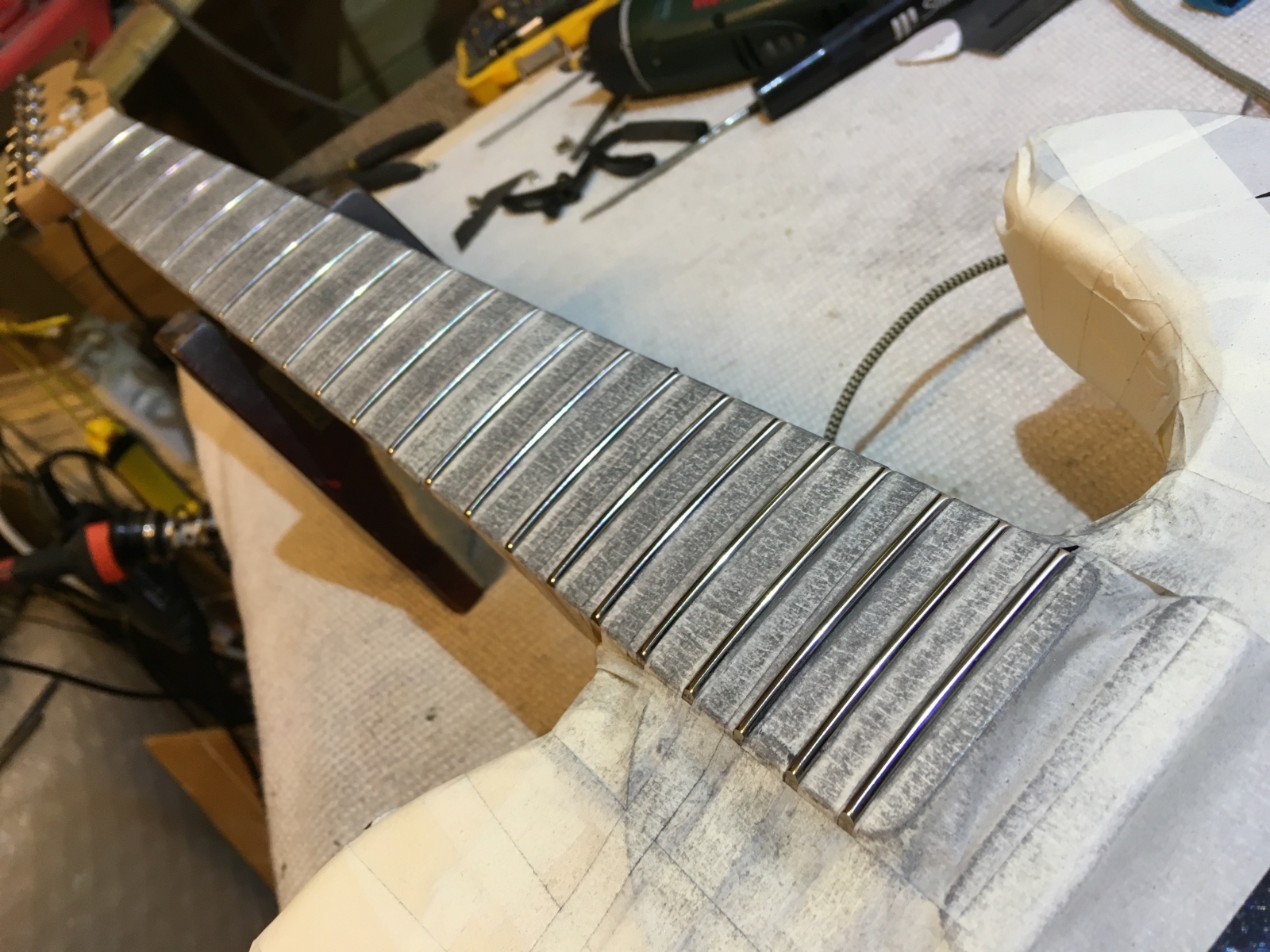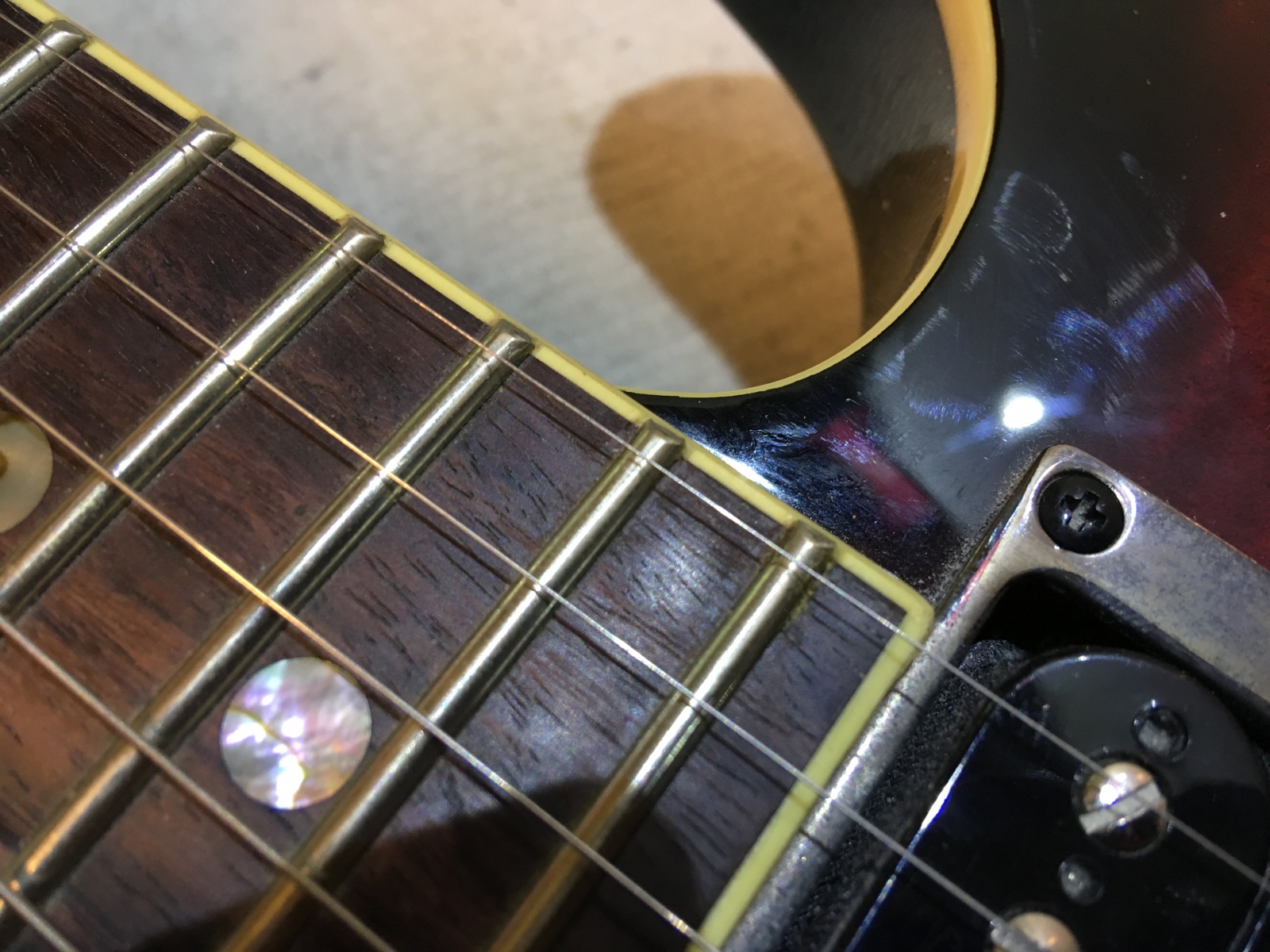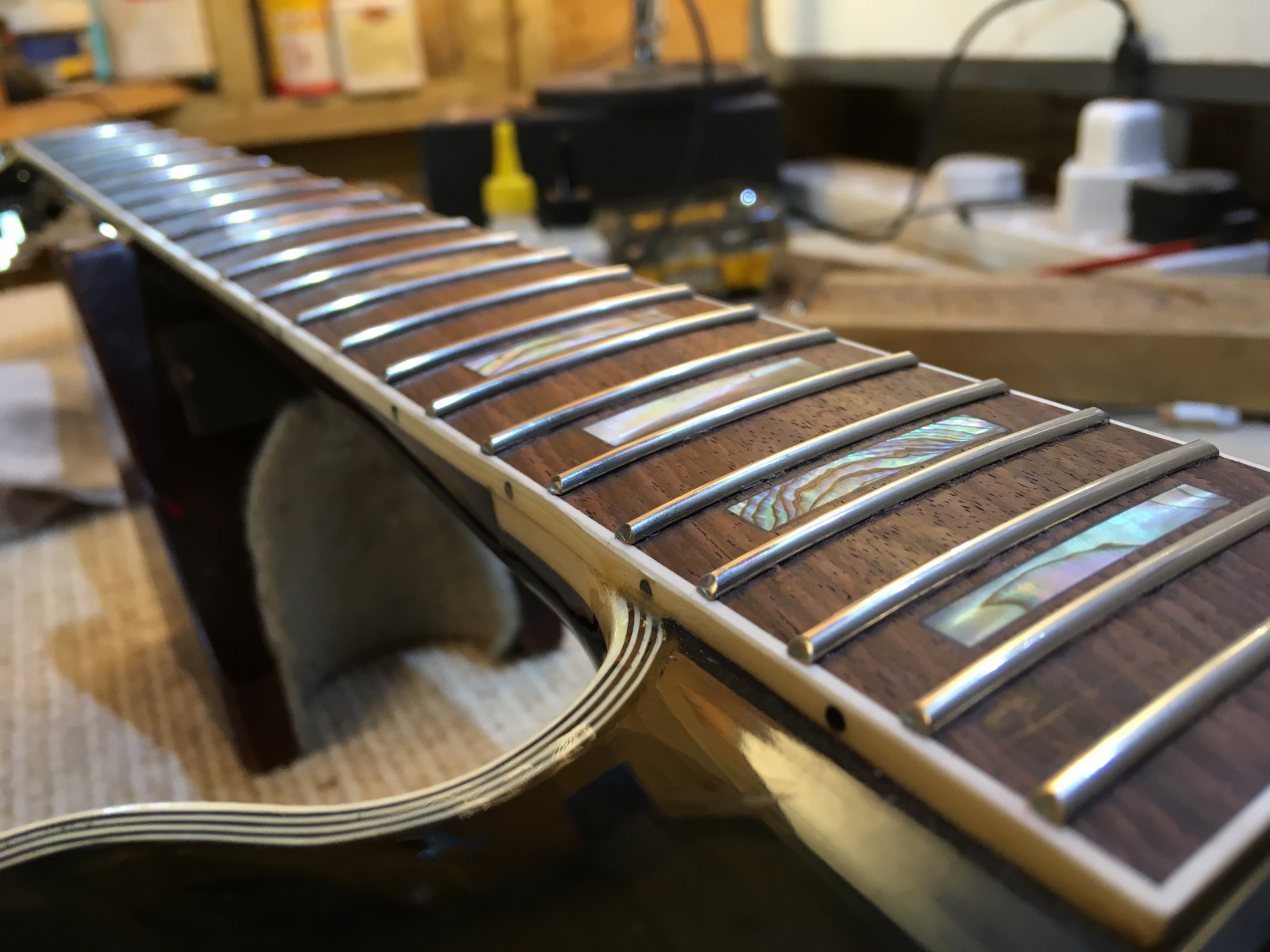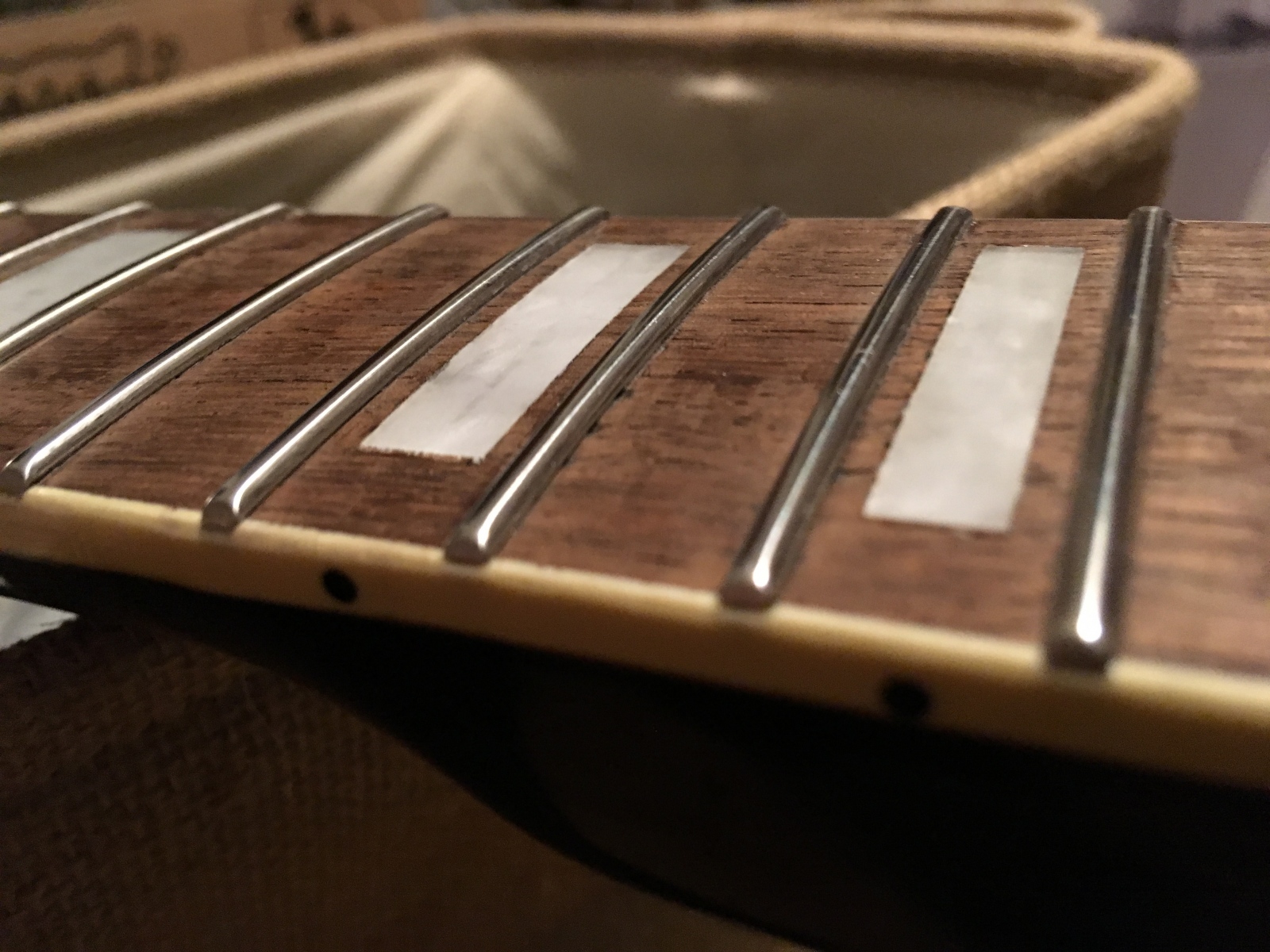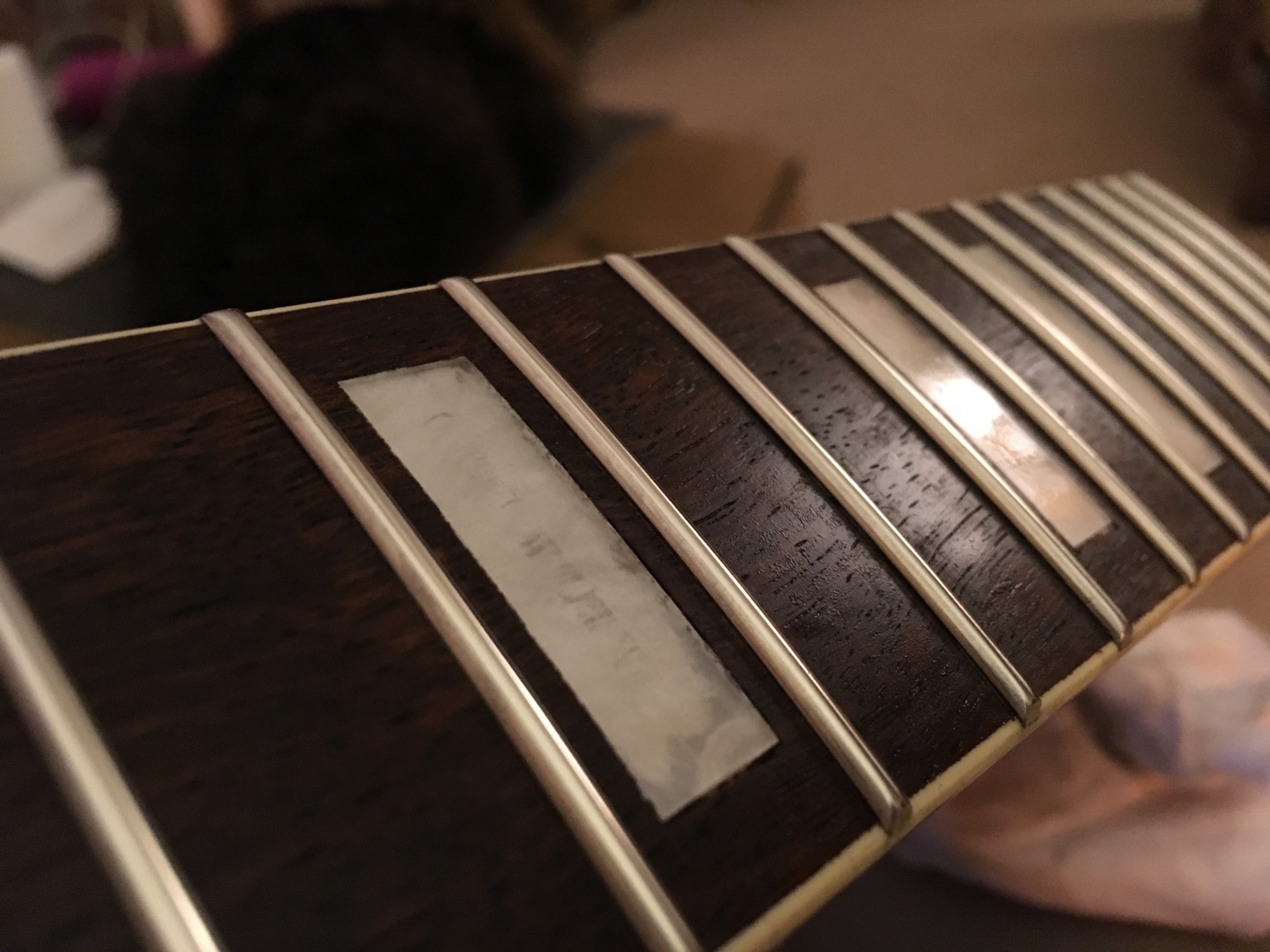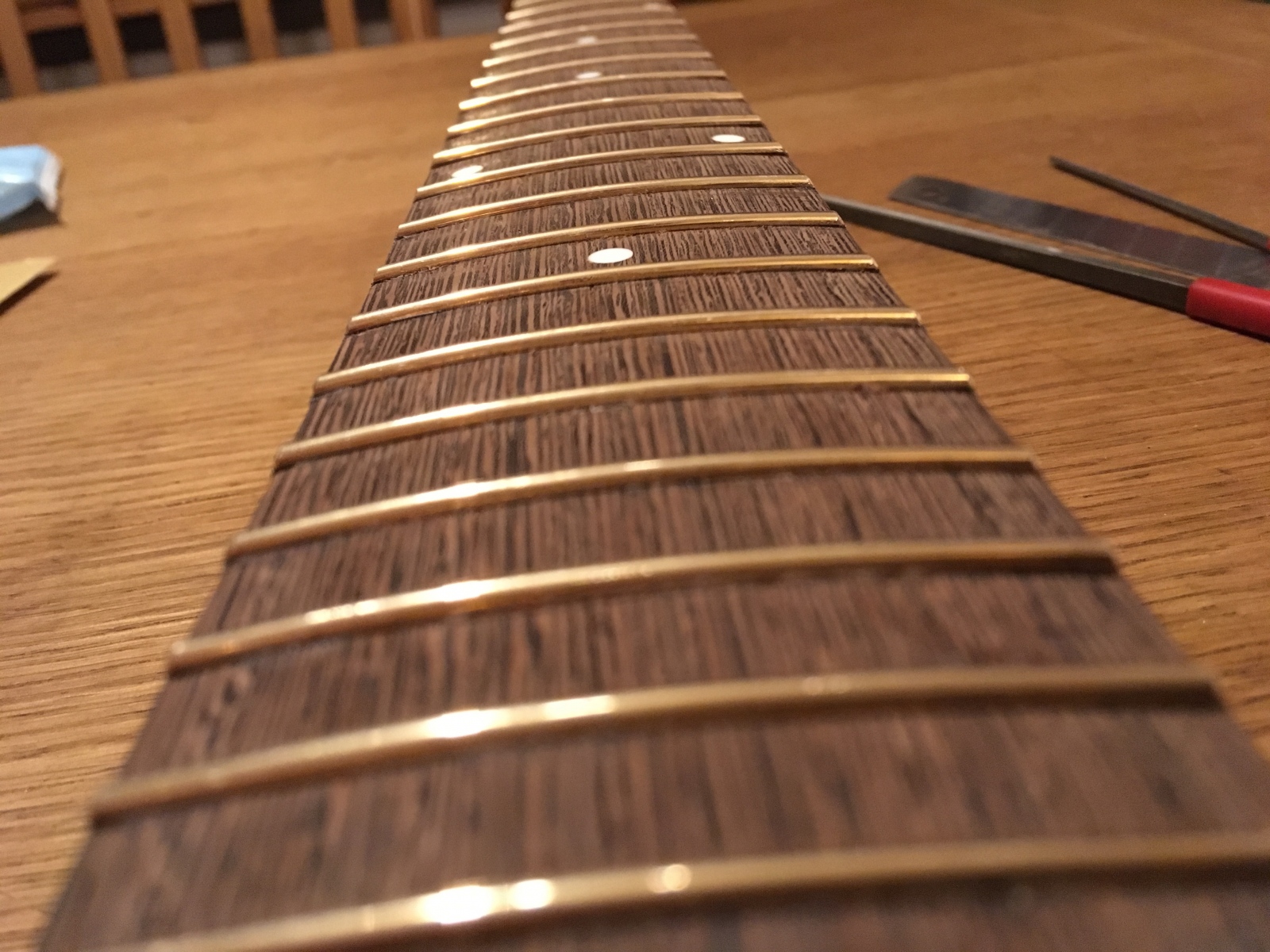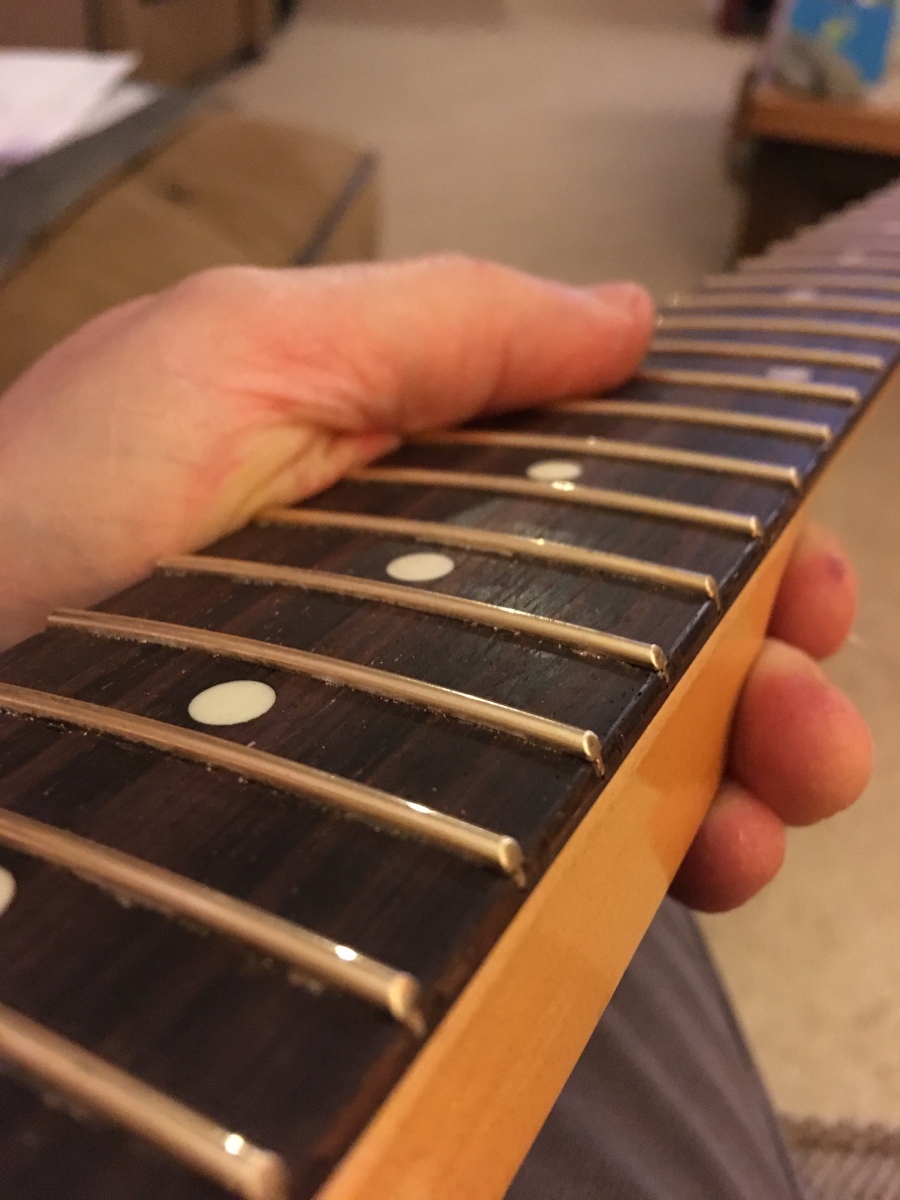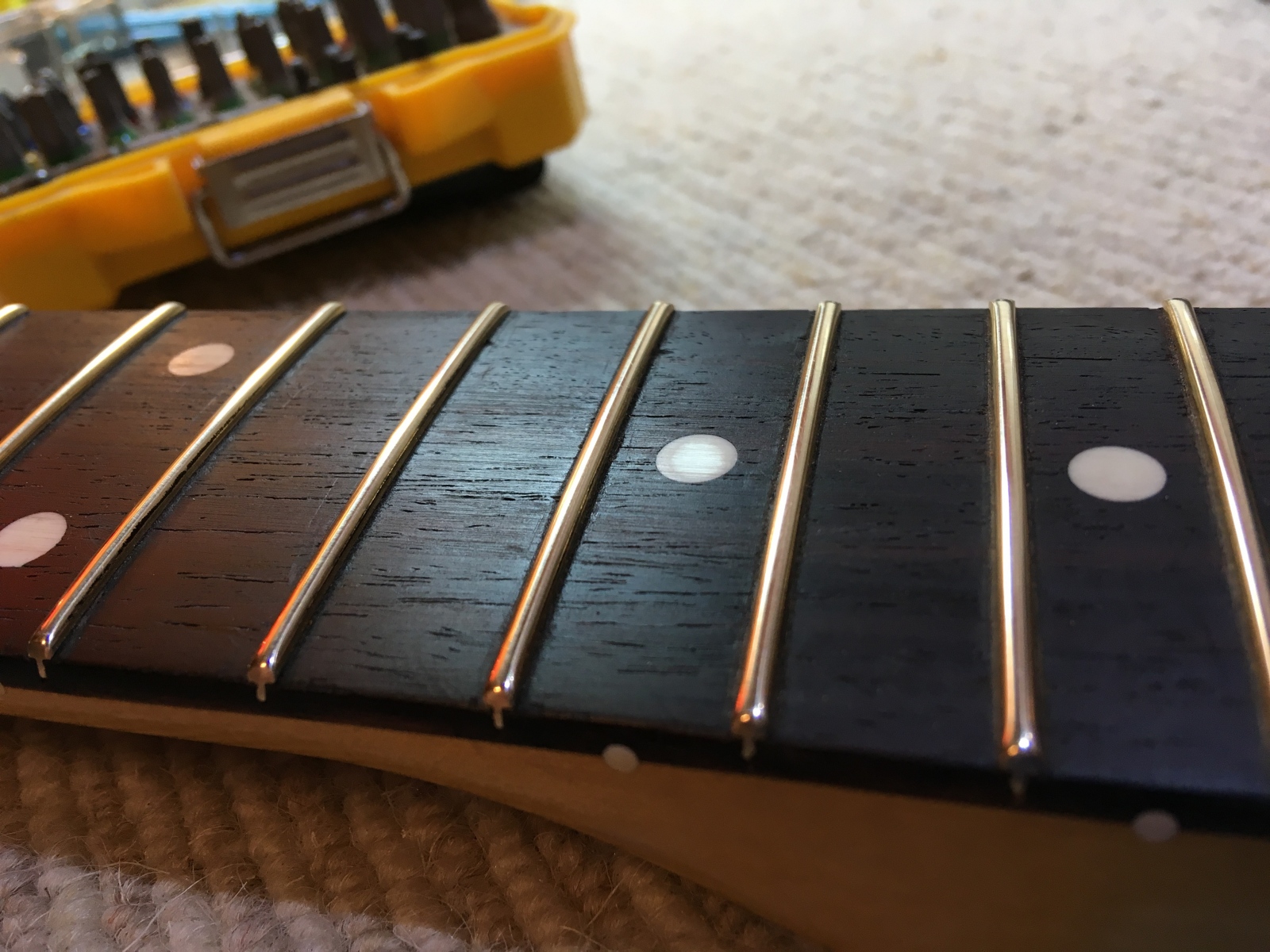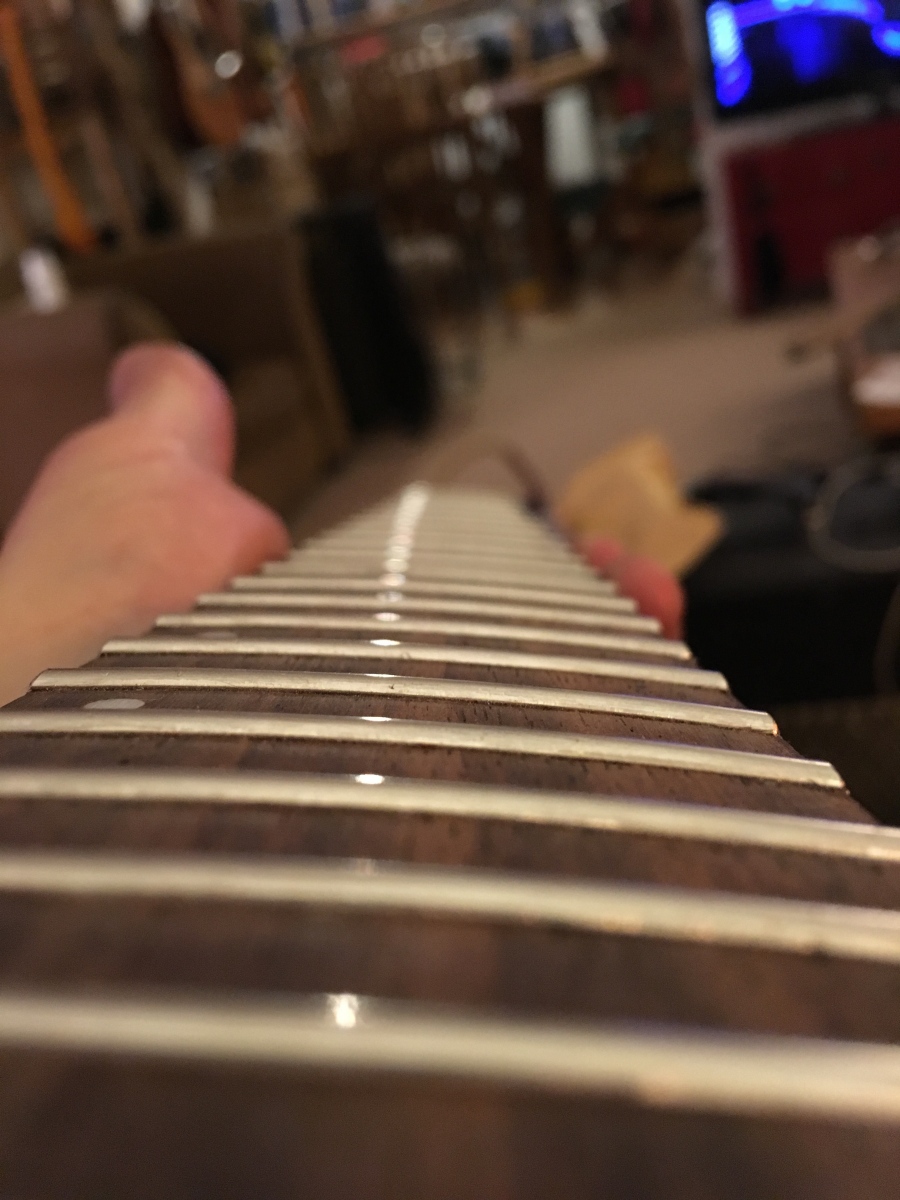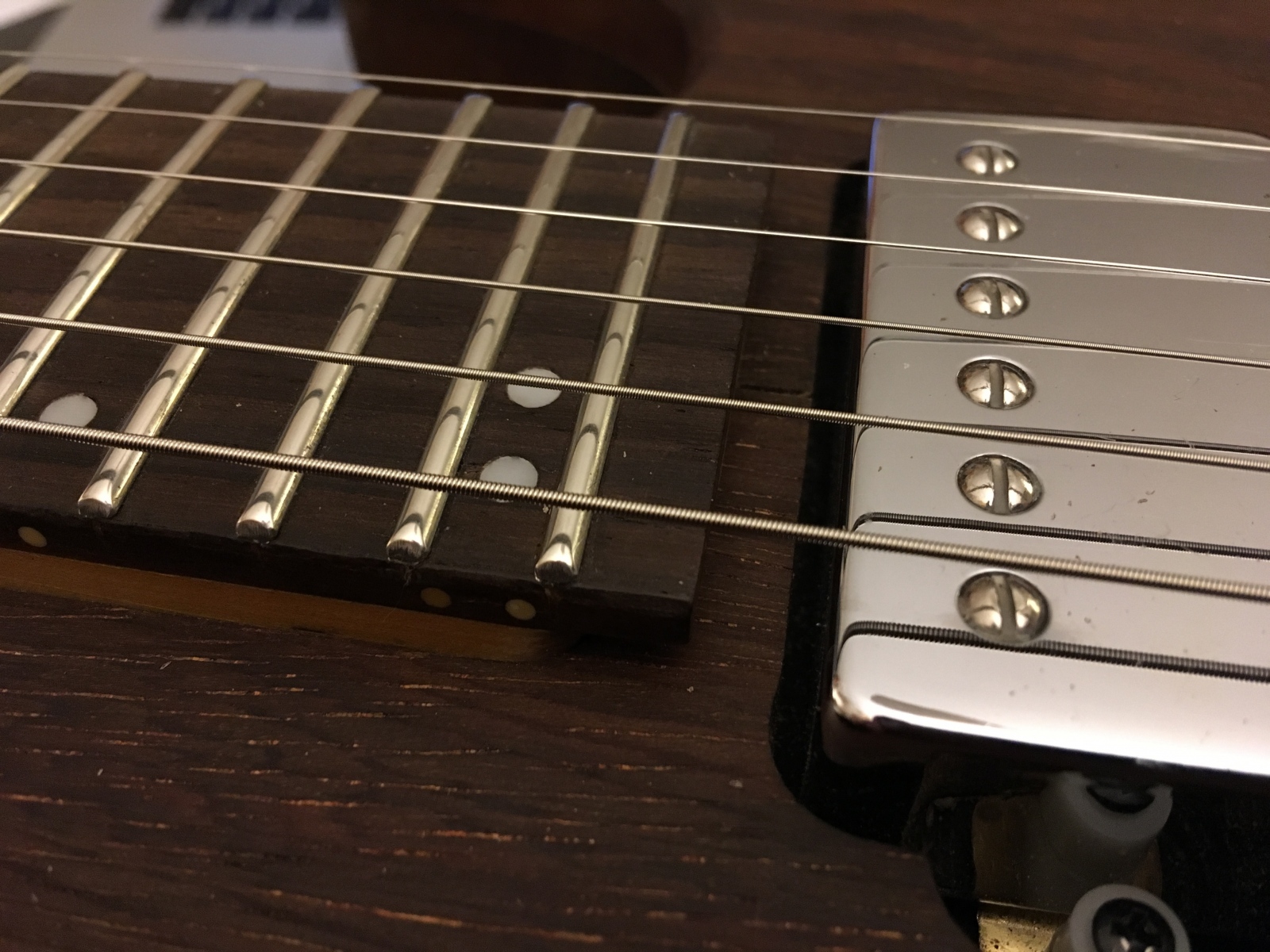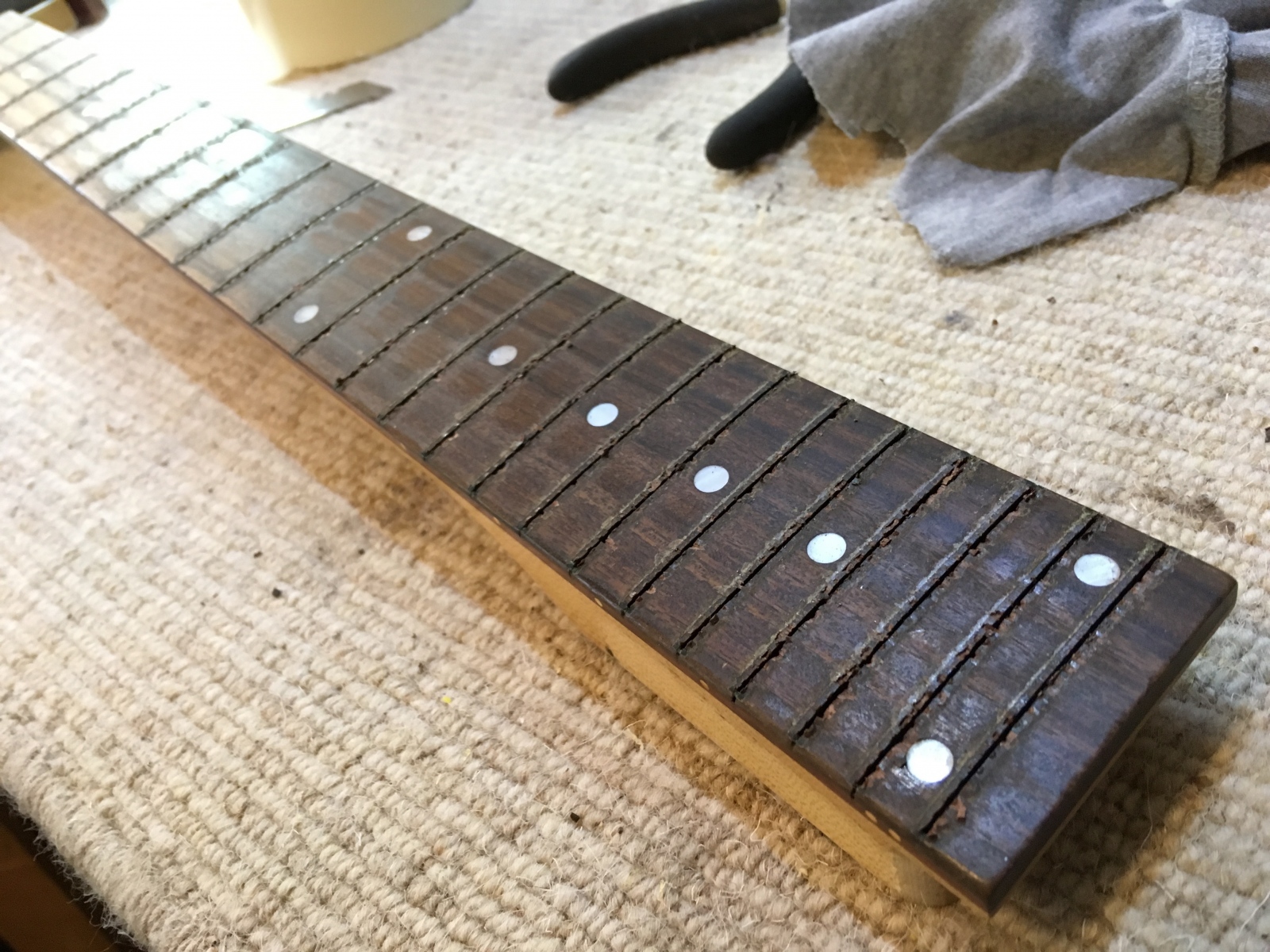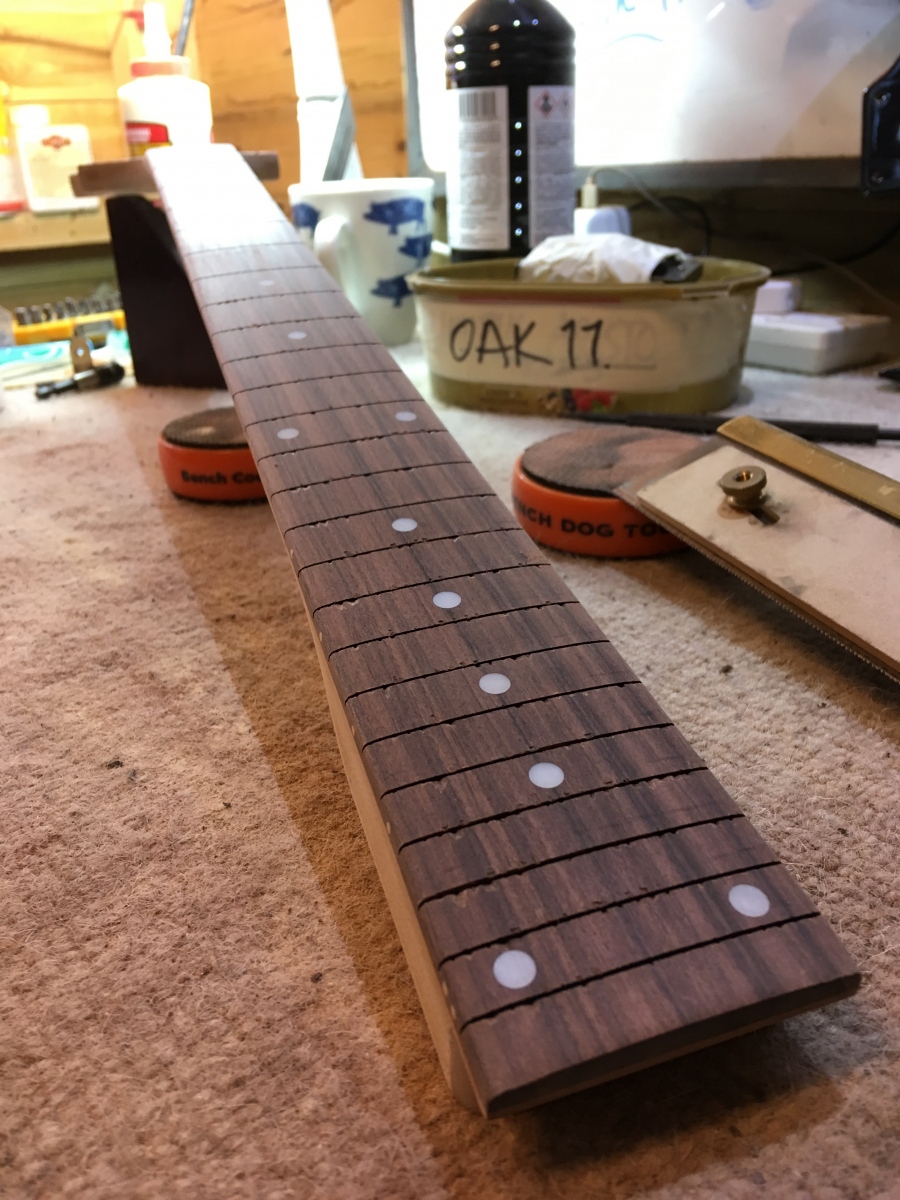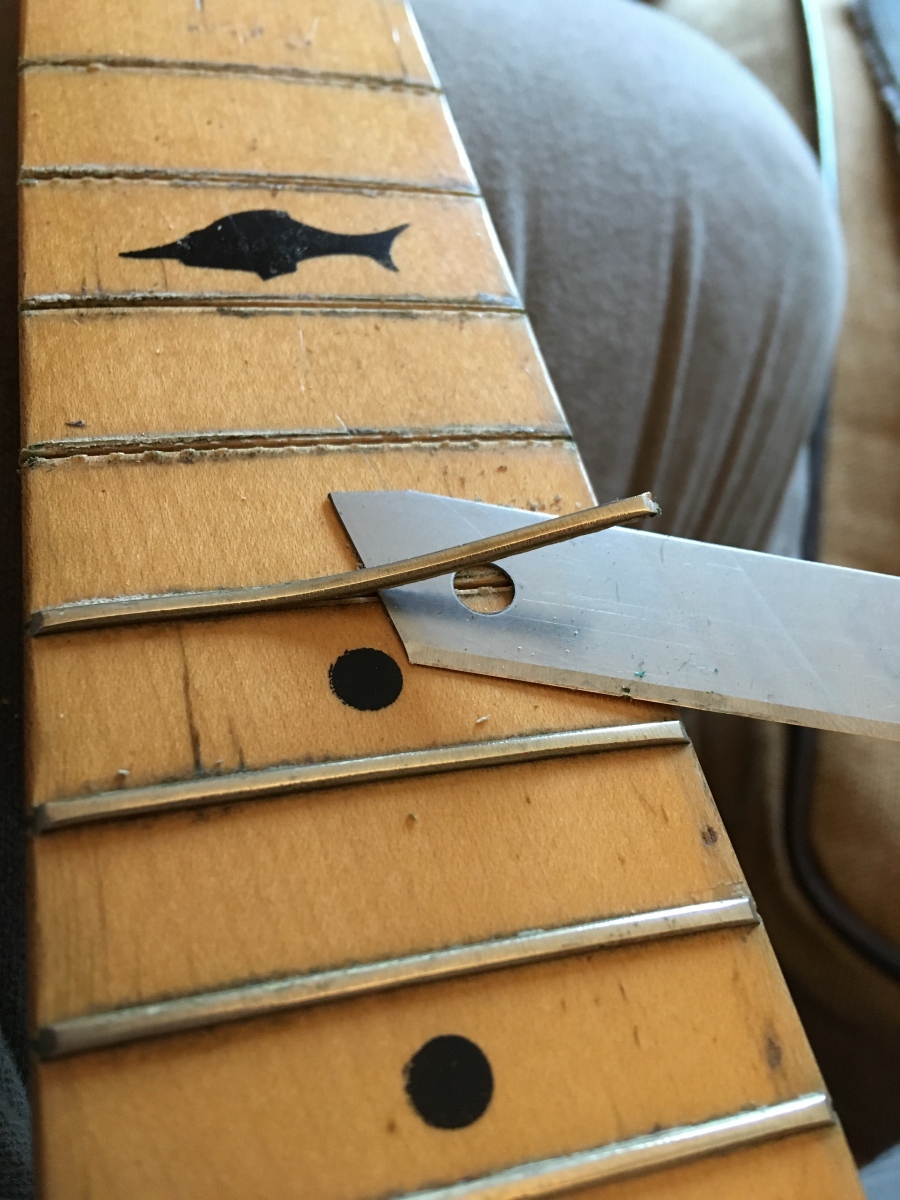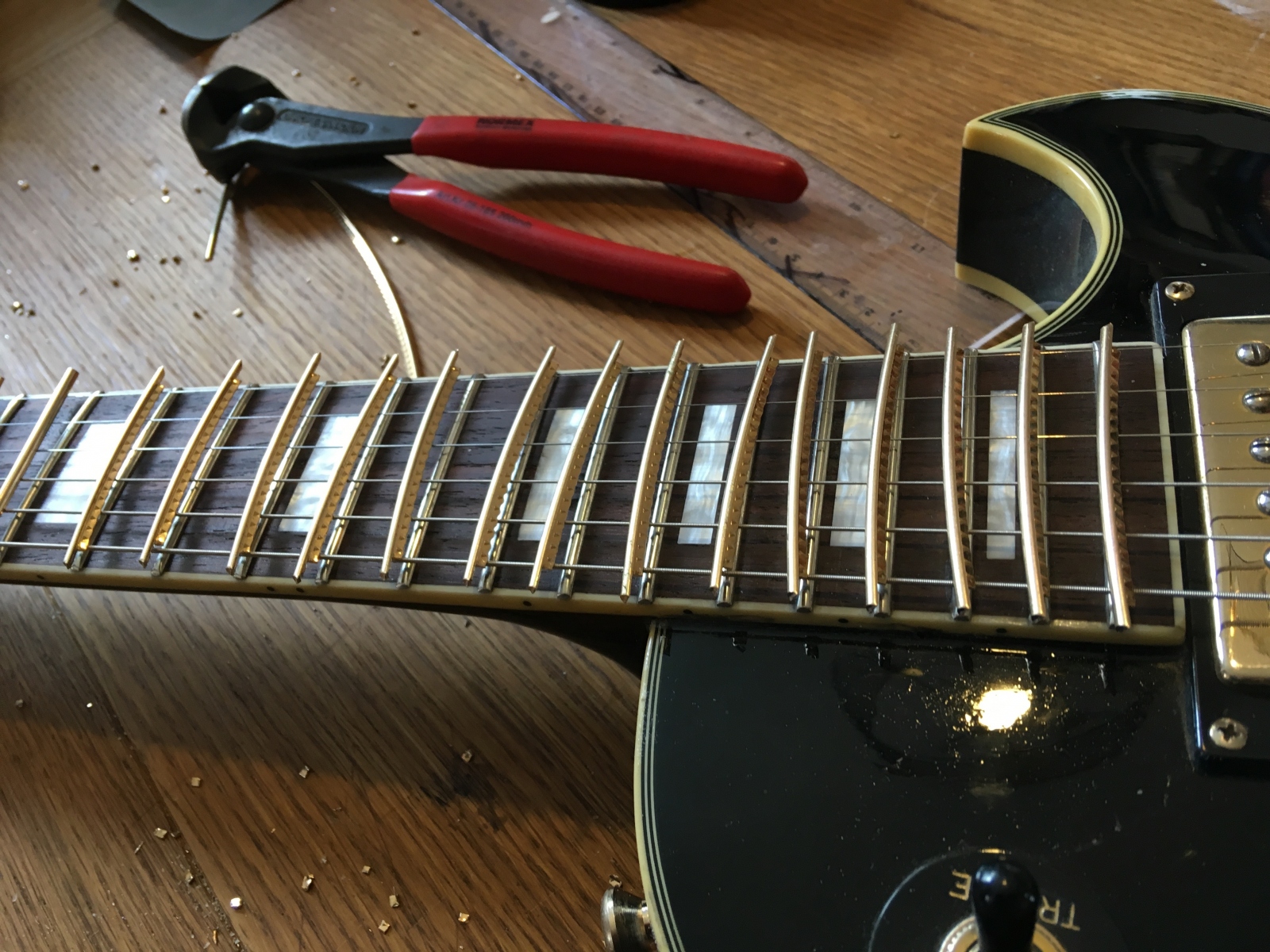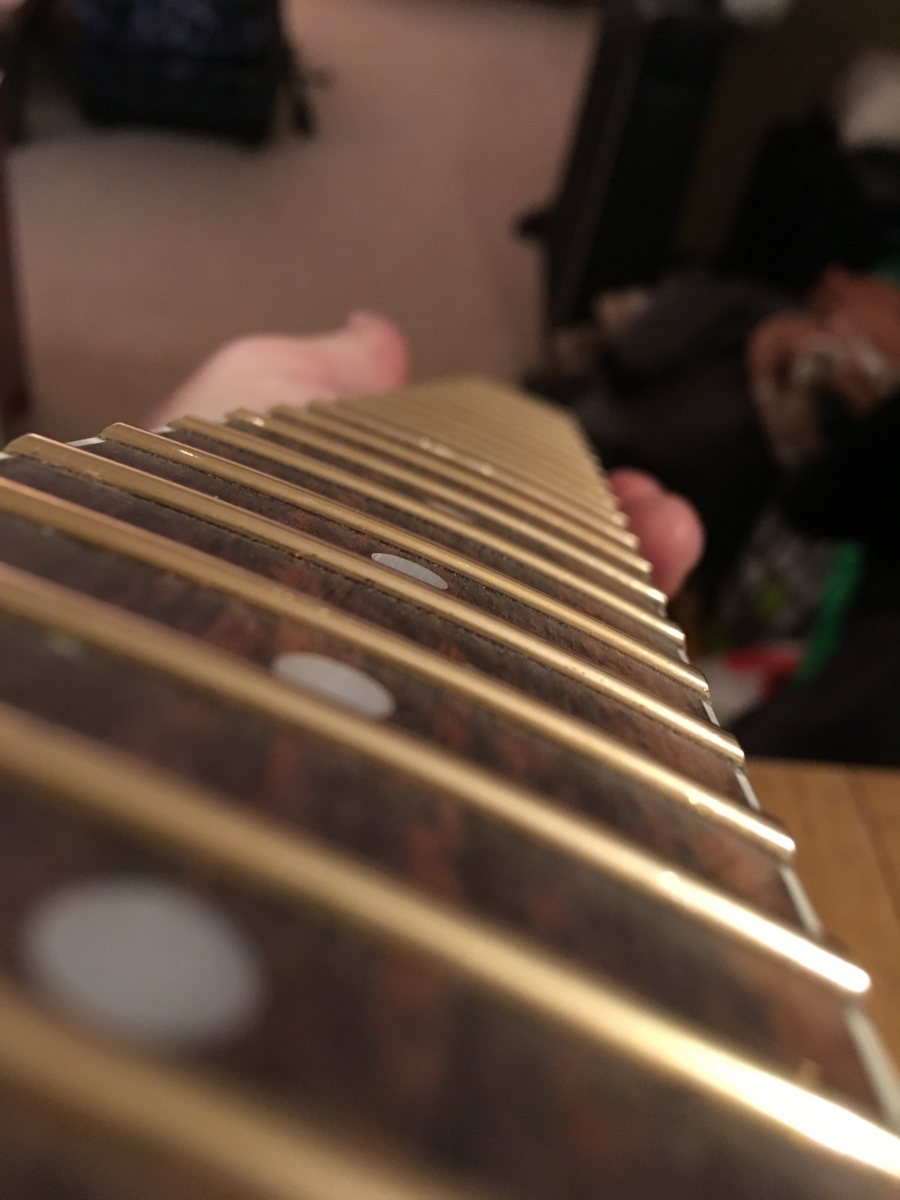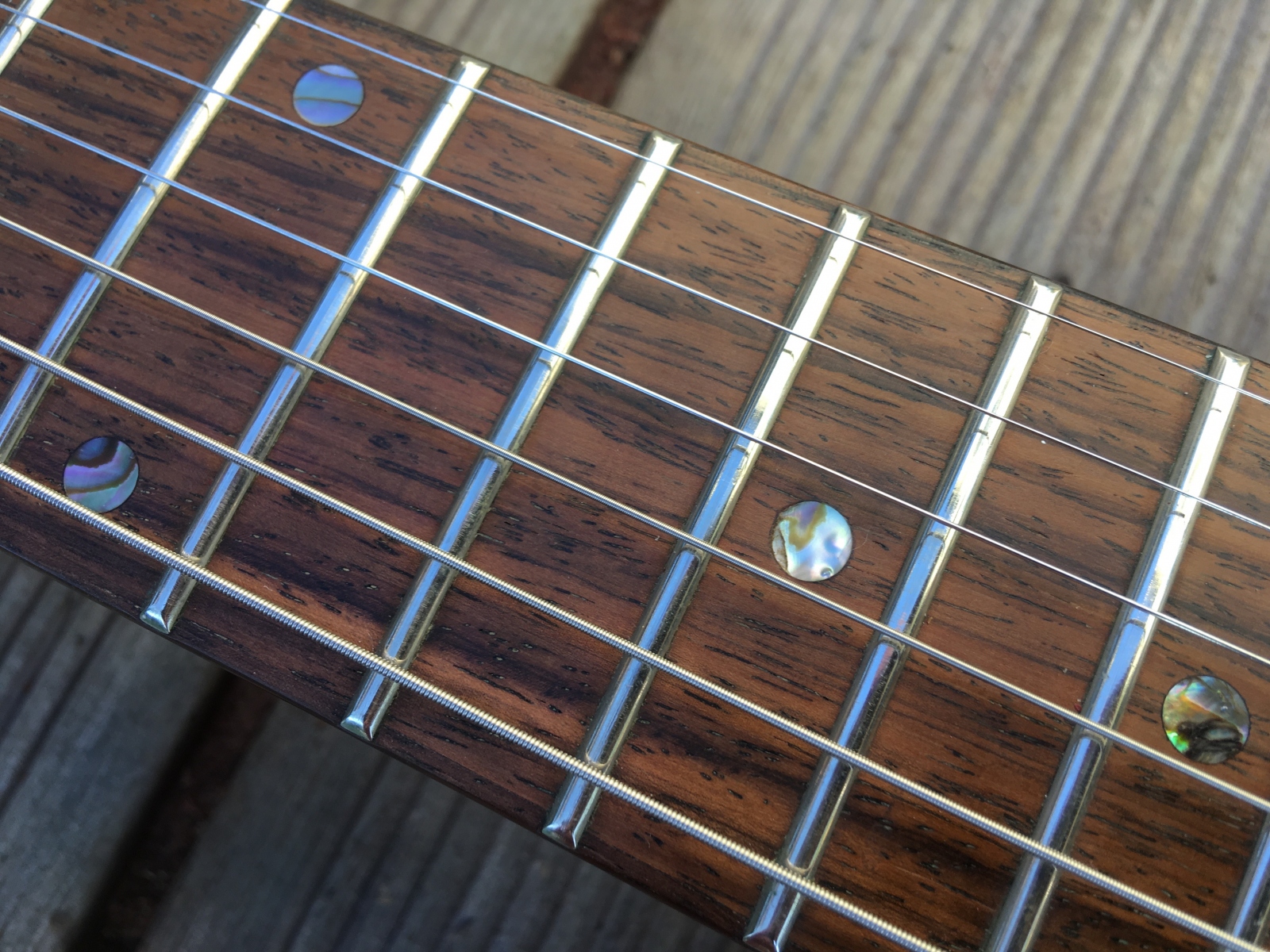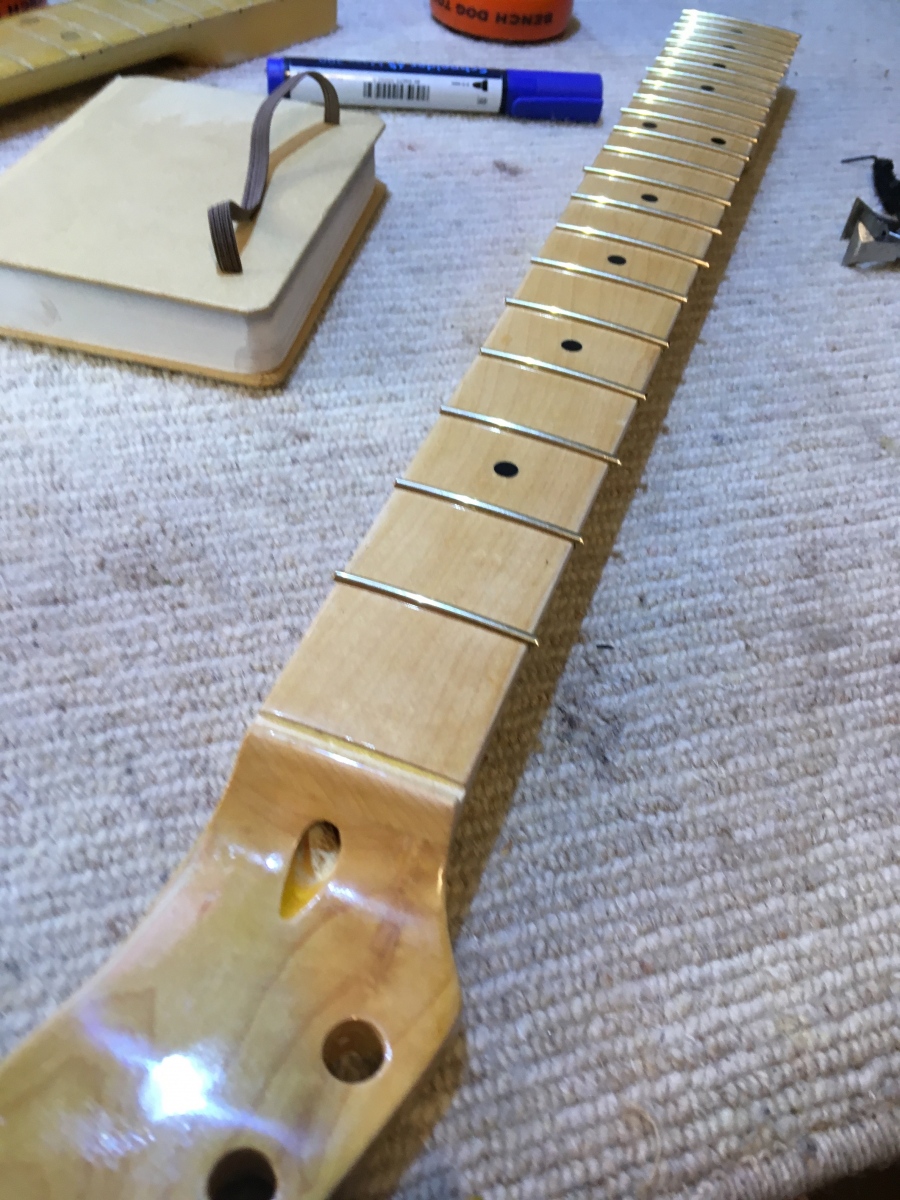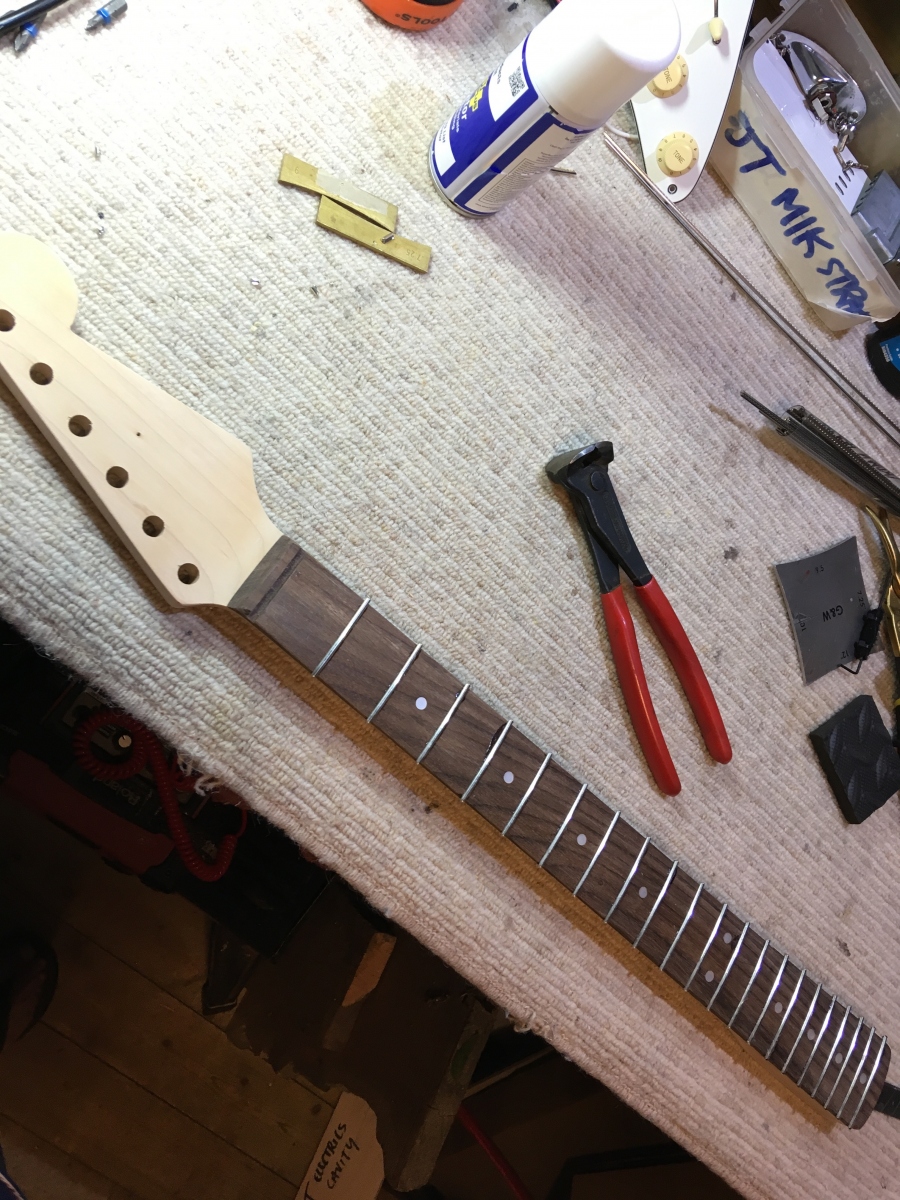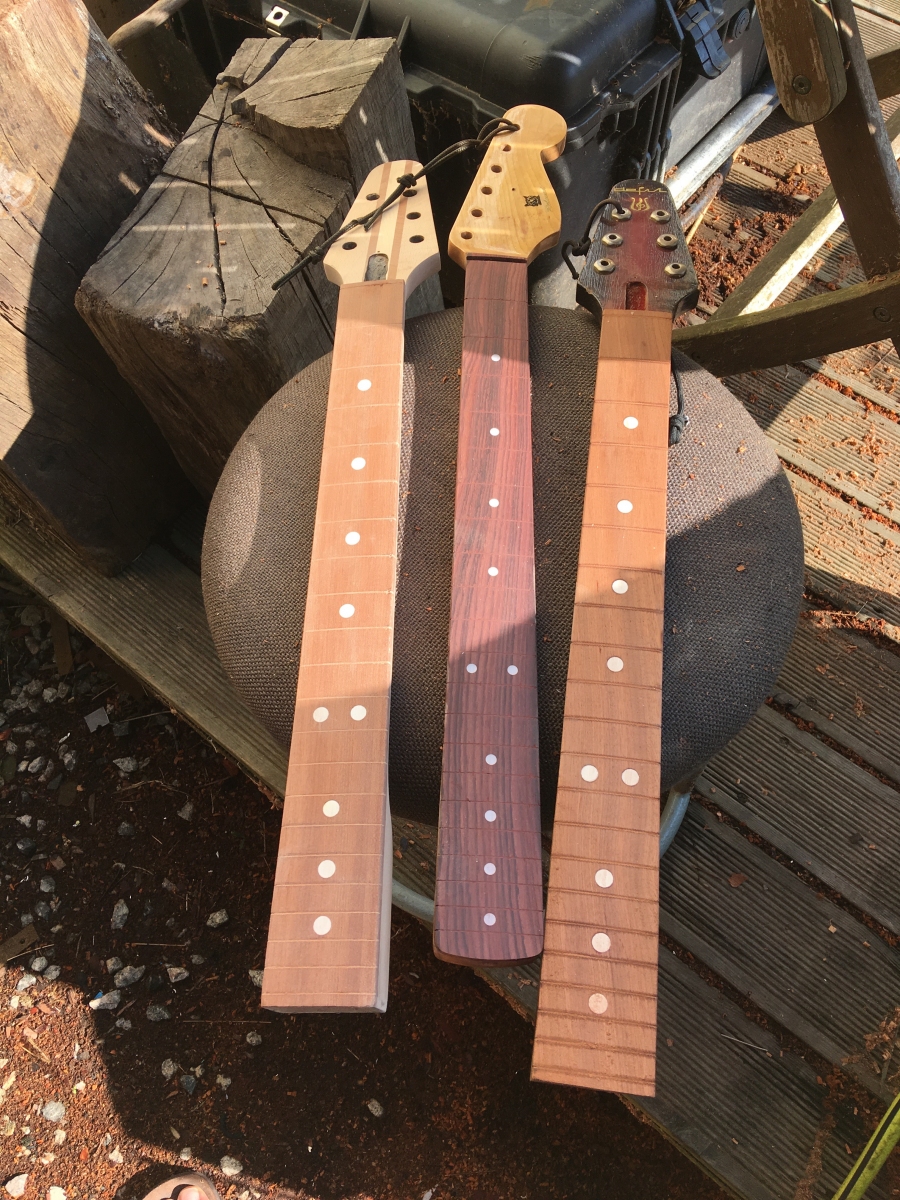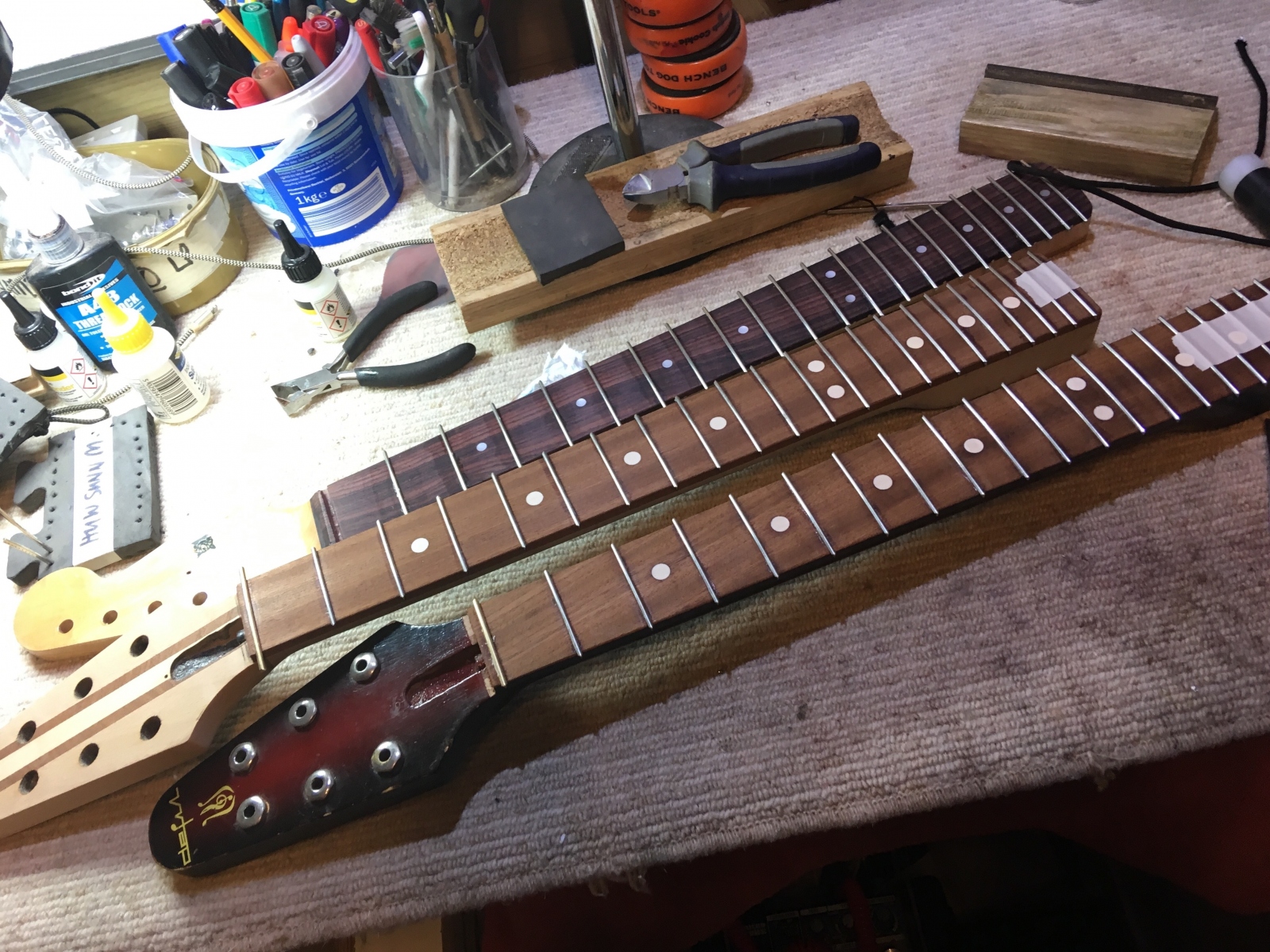


Re-fretting is the process of giving new life to an old guitar. I love re-fretting guitars because the process feels so right – and even better, it allows me to up-cycle old necks that would otherwise be tossed into the burner.
I don’t do partial re-frets because it’s against my principles to put in 3 or 4 new frets and then have to level them down to fit in with the surrounding frets. If the guitar really needs 3 or 4 new frets then it deserves ALL new frets.
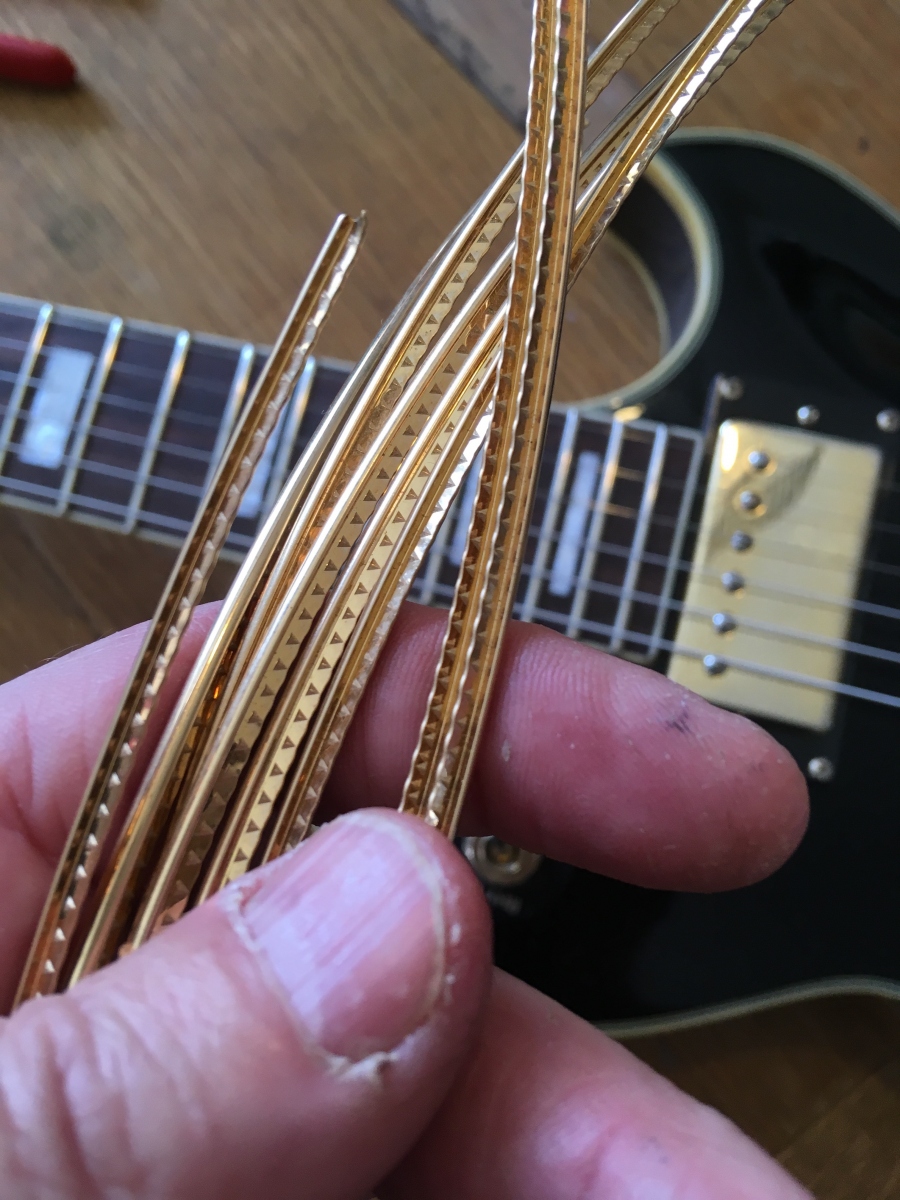
I use AllParts, Jescar and Sintoms regular fretwire (various gauges to suit your preference) but Stainless Steel and some varieties of phosphor bronze are also available at a premium. I don’t charge extra for bound necks. Stainless Steel takes longer to work and inflicts quite a bit of damage on luthier tools which is why it costs more – but the benefit to you is that these frets last WAY longer than the regular fret wire. A nice improvement on regular wire (in terms of hardness and looks) is phosphor bronze. This is as easy to work as regular wire so the only additional cost is a slight premium on the price of the fretwire.
I am happy to re-fret necks (minus their bodies) and this also makes it cheaper for people to send via courier if budget is an issue. A full neck-only re-fret costs £170 in standard wire + £15 return P&P and this includes a radius-block fret leveling, re-crown and polish.
A better option is the re-fret and full set up at £290. This price includes the re-fret plus a full precision fret levelled set up (normal price £140) with new Tusq nut and strings so with this option you’re getting a full set up for a discounted price. This requires having whole guitar (neck, body, bridge and tuners) and allows me to level the newly-fretted neck with the neck strung and under load in the playing configuration. This is 15-30% more accurate than conventional ‘strings off, neck flat’ fret levelling methods because the longitudinal compression of the neck that occurs when the guitar is strung causes a slight ‘bunching’ of the frets. Because of this, a fretboard levelled with the neck flat and strings off may appear flat to your fret-rockers but when loaded it will become slightly ‘bunched’ again as a response to the compression. Because I level with the neck curved and loaded (i.e. with longitudinal compression already at play) the levelness achieved remains when you restring and play the guitar.